
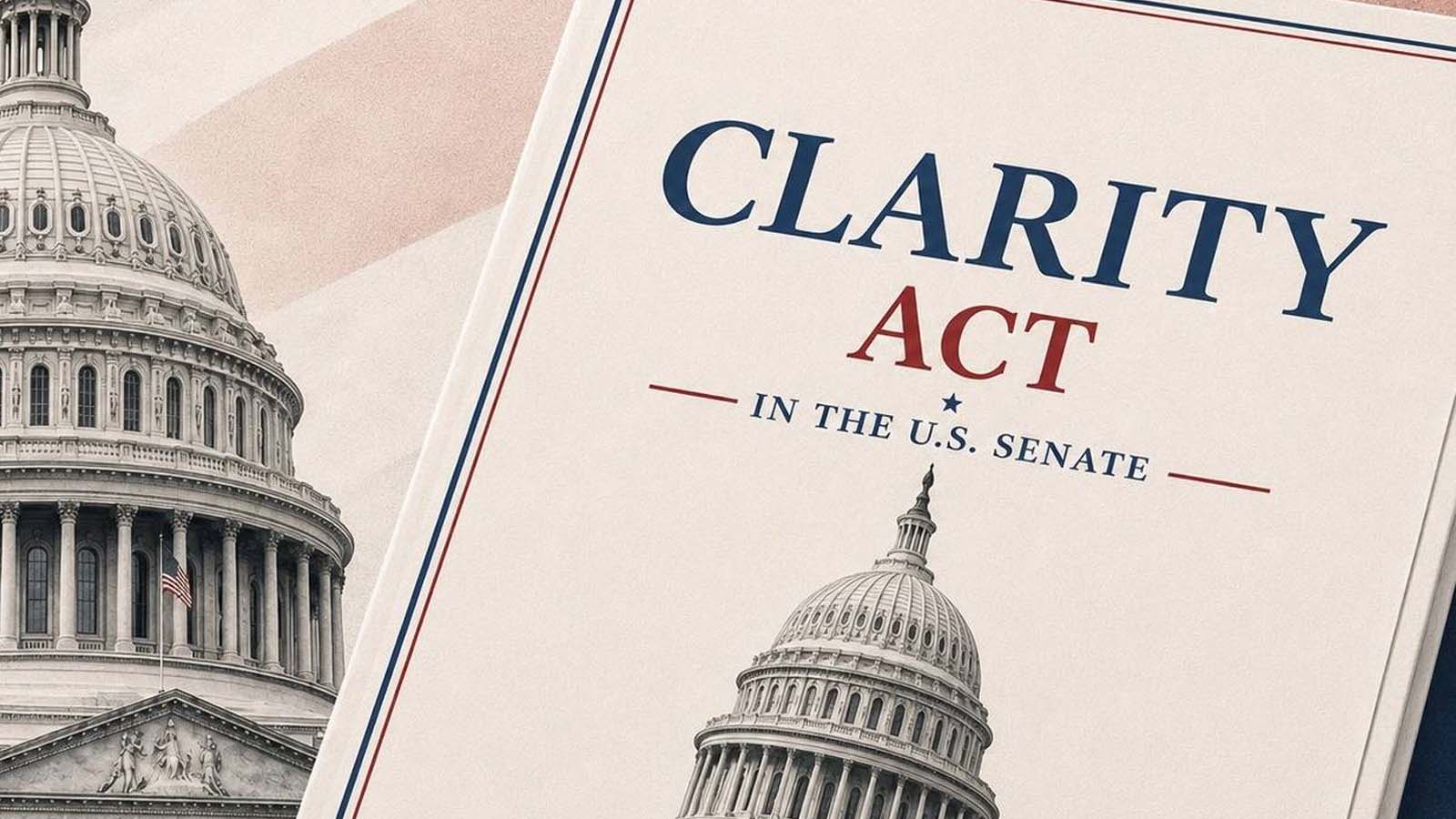
- Twelve senators, including both from California, asked Senate committees July 17 for an IGRA savings clause and an event-contract ban.
- Senate bill 4160, the standalone measure that would supply that ban, protects state law but never mentions IGRA or tribal compacts.
- The CLARITY Act carries neither protection, and the Senate leaves Aug. 10 and does not return until Sept. 14.
- Three California tribes await a 9th Circuit ruling in their Kalshi appeal, argued July 10 with no decision timeline set.
WASHINGTON – The CLARITY Act reached the Senate’s last scheduled week before a five-week recess with no ban on sports event contracts and no IGRA savings clause attached.
Thune Expects A Vote, But The Bill Has Not Reached The Floor
Senate Majority Leader John Thune told reporters Monday that he still expects the chamber to take an initial vote on H.R. 3633, the House-passed crypto market-structure bill, before senators leave, without committing to a date. The bill did not come up in the Senate’s Aug. 3 session, whose only roll-call vote was cloture on the motion to proceed to an unrelated continuing-resolution vehicle, invoked 89-4. No cloture motion has been filed on H.R. 3633.
Under the chamber’s published 2026 legislative schedule, the last day in session before the break is Aug. 7, and a state work period runs Aug. 10 through Sept. 11. Any amendment adding gaming language to the bill has to be offered before that, or wait until the fall.
The July 17 Letter Asked For A Savings Clause And A Ban
In a July 17 letter to the chairs and ranking members of the Senate Banking and Agriculture committees, 12 Democratic senators urged “the adoption of two amended protections through any forthcoming legislation: 1) an IGRA and tribal-state compacts savings clause; and 2) prohibitions on CFTC-registered entities from listing prediction contracts that resemble sports bets or casino-style gaming products.”
An addendum to the letter carries model amendment text that would bar the contracts and bar preemption of IGRA, the Unlawful Internet Gambling Enforcement Act, the Wire Act and any state or tribal law.
Both California senators signed. Alex Padilla and Adam Schiff joined Martin Heinrich, Tina Smith, Maria Cantwell, Richard Blumenthal, Jacky Rosen, Mark Kelly, Patty Murray, Tammy Baldwin, Brian Schatz and Gary Peters. Schiff sits on the Agriculture Committee, which has jurisdiction over the Commodity Exchange Act and holds the standalone bill that would deliver the second of those two asks.
The letter argues that any further grant of exclusive CFTC jurisdiction over digital asset markets, without guardrails on prediction contracts, would “permanently circumvent the hard-won regulatory and economic protections established under IGRA and states’ police powers.” It follows the tribal defense fund against prediction markets that the Indian Gaming Association and its member tribes assembled earlier this year.
A State-Law Savings Clause Does Not Help A Tribe Suing Under IGRA
The Prediction Markets Are Gambling Act, S. 4160, introduced by Schiff and Sen. John Curtis, R-Utah, on March 23, is the standing Senate text that would deliver the second ask. It adds a paragraph to Section 5c(c) of the Commodity Exchange Act barring any agreement, contract or transaction “relating to any sporting event or athletic competition or any casino-style game” from being listed or made available for clearing or trading on or through a registered entity.
The definitions reach further than sports. A casino-style game under the bill is any game traditionally found in a casino, including slot machine games, video poker, blackjack, roulette, craps, any other casino-style table game, bingo, lottery and any simulation of those games. A sporting event or athletic competition covers any live or virtual contest of physical activity or skill, amateur, collegiate or professional.
What the bill does not do is name a tribe. Its rule of construction is a single sentence protecting one sovereign: nothing in the act preempts “any State law or rule” that regulates or prohibits such contracts. IGRA is absent. So are tribal-state compacts, tribal gaming ordinances and the National Indian Gaming Commission.
That absence is the distance between the letter’s two requests. A listing prohibition would reach every registered exchange nationwide. A savings clause is what a tribe cites when an exchange argues federal commodities law occupies the field on tribal land, where state gambling law does not run in the first place.
Legal gambling in California is limited to tribal casinos, cardrooms, pari-mutuel horse racing and the state lottery, and voters rejected both sports betting measures on the 2022 ballot.
The prohibition would also apply only going forward. Under the bill’s applicability clause, it reaches contracts “entered into on or after the date of enactment.”
Kalshi Case Argued July 10 Could Land During The Recess
Blue Lake Rancheria, Chicken Ranch Rancheria of Me-Wuk Indians and Picayune Rancheria of the Chukchansi Indians are appealing a U.S. District Court for the Northern District of California ruling that declined to bar Kalshi’s sports contracts from their lands. A panel of the 9th U.S. Circuit Court of Appeals heard argument July 10 in Blue Lake Rancheria v. Kalshi, No. 25-7504. It did not rule from the bench and set no timeline for a decision.
The tribes’ claim rests on IGRA, not California law, and the state licenses no sports wagering of any kind, so compact exclusivity and the federal statute are the whole of their position on prediction markets.
If the panel rules while the Senate is out, the chamber does not return until Sept. 14.