
- The Fort Mojave Indian Tribe received $275,000 for the quarter ended June 30 and $27.1 million to date.
- Section 5.2 of the new compact says the tribe owes no payment to the Revenue Sharing Trust Fund.
- The compact authorizes 1,200 gaming devices and two casinos but records the tribe’s intent to stay under 350 devices.
- California paid $19.25 million to 70 eligible tribes for the quarter, part of $1.95 billion since inception.
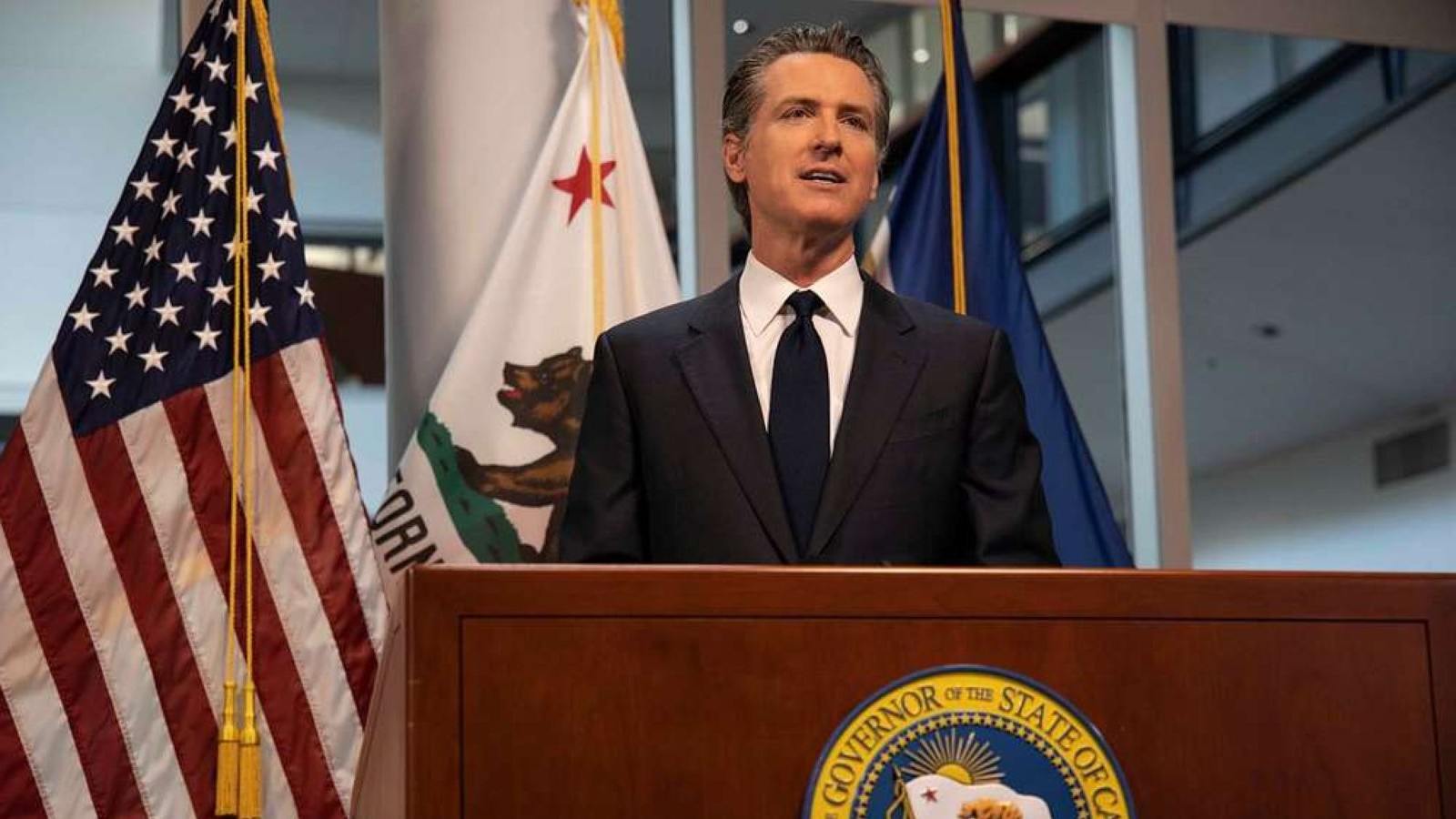
SACRAMENTO, Calif. – The Fort Mojave Indian Tribe collected $275,000 from California’s Revenue Sharing Trust Fund for the quarter ended June 30, the California Gambling Control Commission reported July 23. Two days earlier, Gov. Gavin Newsom announced a casino compact that obligates the tribe to pay nothing into that fund.
A Compact That Authorizes 1,200 Devices And Expects Fewer Than 350
Newsom announced July 21 that he had signed the tribal-state gaming compact with the Fort Mojave Indian Tribe, a 120-page document that would let a tribe with no California gaming operation open two of them.
The device ceiling sits at 1,200 under Section 4.1. Section 4.2 caps the tribe at two venues, one on trust land inside its reservation and a second, conditional one near Needles on acreage the Bureau of Land Management has flagged for disposal. The United States would have to take that parcel into trust first, and the site then needs a favorable two-part determination under 25 U.S.C. 2719(b)(1)(A) plus the governor’s concurrence, an outcome the compact expressly declines to predict.
Section 5.2 disposes of revenue sharing in one sentence. The tribe, it states, “shall have no obligation to pay any amount” into the Revenue Sharing Trust Fund or the Tribal Nation Grant Fund. Both accounts move money from gaming tribes to tribes that run no casino or only a small one, the redistribution written into tribal gambling in California.
The tribe’s obligations to the state run through Section 4.3 instead, a pro rata share of California’s regulatory and problem-gambling costs paid into the Indian Gaming Special Distribution Fund. Any annual increase in the state appropriation used to calculate that share is capped at 5%, and the parties wrote in that they expect the tribe’s increases to run well below the cap.
Local governments are treated the same way. Section 11.1 sets up an Impact Mitigation Fund worth 0.5% of net win for nearby police and emergency services, but the obligation switches on only once the tribe’s floor reaches 350 machines. The same subdivision records that “at present the Tribe intends to operate as a Limited-Gaming Tribe.”
Under Section 5.1, that label belongs to a tribe running fewer than 350 devices. The two funds pay tribes in that class, along with those that run no gaming at all.
What The Tribe Has Drawn As A Non-Gaming Tribe
The compact’s preamble sets out the tribe’s history with the fund. Fort Mojave signed a compact with California in 2004, “has never invoked its rights to operate gaming” in the state, and “has been deemed a non-gaming tribe for the purposes of the Revenue Sharing Trust Fund since its creation.”
The regulator’s own ledger shows what that has meant. In a staff report dated July 23, the commission published its Revenue Sharing Trust Fund distribution list for the June quarter. The Fort Mojave Indian Tribe of Arizona, California and Nevada sits at line 32, drawing $275,000 for the period and $27,136,089.02 since the fund began.
Every eligible tribe received the same $275,000, or $1.1 million a year. The commission distributed $19,250,000 to 70 of the 89 tribes listed, against $33,972,857.92 in payments and $969,402.56 in interest deposited during the quarter. The fund has paid out $1,945,701,946.56 since inception and held $105,230,608.27 after the distribution, having transferred $51,652,649.18 to the Tribal Nation Grant Fund under the 2025 Budget Act.
Those payments come from the operators. California’s tribal land based casinos fund the account under compacts that predate this one, and the tribes that pay on a share of net win are reported only in aggregate, because those figures are confidential under their own compacts.
Wilton Rancheria Shows The Other Side Of The Threshold
The same ledger carries the reverse case. Wilton Rancheria appears at line 87 with a footnote reading “No longer an eligible recipient Tribe; however, previously received RSTF distributions,” and $14,369,505.49 collected before that status changed. The tribe now operates Sky River Casino in Elk Grove, which advertises more than 2,500 slot machines, well above the 350-device line.
Fort Mojave’s compact does not commit the tribe to any device count. It authorizes 1,200 and records an intention to stay under 350. Whether California’s newest casino operator pays into the fund or draws from it turns on that gap, which the compact leaves to the tribe’s operating decisions rather than to a floor written into the text.
The compact lands as tribal operators statewide put capital into new floors, a buildout tracked in June when tribal casinos spent billions on new resorts and gaming floors. Fort Mojave would enter that market without the revenue-sharing obligations its established competitors carry.
Ratification And Federal Register Publication Remain
The compact is not in force. Section 14.1 keeps it inert until it clears ratification under both tribal and California law and the approval notice runs in the Federal Register under 25 U.S.C. 2710(d)(3)(B). Section 14.2 then runs it 25 years from that date.
The commission’s next Revenue Sharing Trust Fund distribution covers the quarter ending Sept. 30. Fort Mojave remains on the eligible recipient list.