
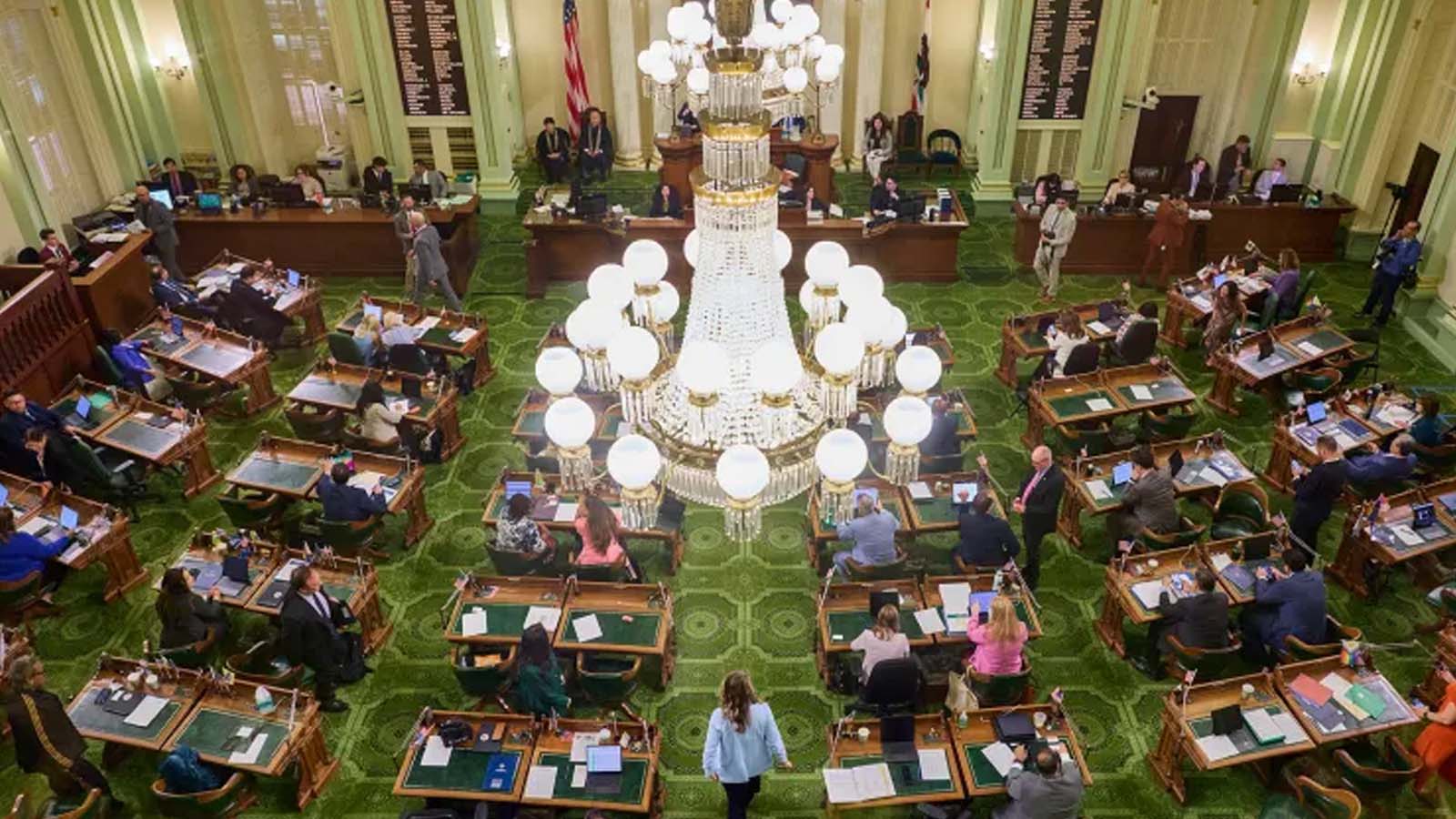
- The Assembly deleted SB 1235’s Gambling Control Commission oversight language on Aug. 18 and replaced it with three tribal gaming compacts.
- The deleted section would have required the governor to notify two legislative committees whenever he removes a gambling commissioner.
- The new text ratifies compacts with the Picayune Rancheria, Fort Mojave and Pechanga, executed between June 11 and Aug. 5.
- SB 1235 is now an urgency measure needing two-thirds in each house before the Legislature adjourns Aug. 31.
SACRAMENTO, Calif. – The California Assembly stripped SB 1235 of its entire text on Aug. 18 and replaced it with ratification of three tribal-state gaming compacts, deleting a provision that would have required the governor to notify the Legislature whenever he removes a member of the California Gambling Control Commission.
The Oversight Language That Came Out
As introduced Feb. 19, SB 1235 ran to one operative section amending Section 19813 of the Business and Professions Code, part of the Gambling Control Act that anchors California gambling laws. Existing law lets the governor remove a commissioner for incompetence, neglect of duty or corruption after first giving the member a copy of the charges and an opportunity to be heard.
The bill would have added a single obligation on top of that power, requiring the governor to notify the Senate and Assembly committees on Governmental Organization of any such removal.
The Senate Committee on Governmental Organization introduced the measure, with its chair, Sen. Susan Rubio, D-Baldwin Park, as lead author. It drew no recorded no votes at any stage. The Senate passed it 38-0 on the consent calendar April 16, and it cleared the Assembly Governmental Organization Committee 18-0 on June 10 and Assembly Appropriations 15-0 on June 24, each committee recommending the consent calendar.
On June 29, the bill came off the consent calendar on a motion by Assembly Member Cecilia Aguiar-Curry and was ordered to the inactive file the same day. She gave notice on Aug. 13 that she intended to remove it from that file. The bill came back Aug. 17 and was ordered to third reading, and the Assembly rewrote it on the floor the following day.
Three Compacts Went In, One Signed 13 Days Earlier
The replacement text adds Section 12012.122 to the Government Code and ratifies three agreements executed this year. They are the fifth amendment to the compact with the Picayune Rancheria of Chukchansi Indians of California, executed June 11, the tribal-state compact with the Fort Mojave Indian Tribe, executed July 20, and the first amendment to the compact with the Pechanga Band of Indians, executed Aug. 5.
1,200 Devices And No Revenue-Sharing Payment
Fort Mojave’s is the only full compact among the three rather than an amendment to an existing one. Gov. Gavin Newsom announced the signed Fort Mojave compact on July 21. It runs 25 years, authorizes up to 1,200 gaming devices across no more than two casinos, and states in Section 5.2 that the tribe has “no obligation to pay any amount” into the Revenue Sharing Trust Fund or the Tribal Nation Grant Fund.
The compact’s preamble states the tribe has never invoked its right to operate gaming in California and has been deemed a non-gaming tribe for purposes of the Revenue Sharing Trust Fund since that fund’s creation. The compact would let it open as many as two venues at a point when tribal casinos spend billions on new resorts and gaming floors across the state.
CEQA Does Not Reach The Compacts Or The Local Agreements
Subdivision (b) of the new section declares that, “in deference to tribal sovereignty,” five categories of action are not projects for purposes of the California Environmental Quality Act.
Those are execution of a compact ratified by the section, execution of an amended compact ratified by the section, and execution of an intergovernmental agreement between a tribe and a county or city negotiated under a ratified compact. The list also covers execution of such an agreement with the Department of Transportation or another state agency and the on-reservation impacts of complying with a ratified compact. A second paragraph preserves CEQA obligations for cities, counties, Caltrans and other agencies in all other respects.
Two-Thirds Votes In Both Houses Before Aug. 31
The rewrite converted SB 1235 from a majority-vote bill into an urgency statute taking effect immediately on enactment, which raises the threshold to two-thirds of each house. The urgency clause states that immediate effect is necessary to enhance “the economic development, stability, and self-sufficiency” of the three tribes and to protect their members, surrounding communities and the California public “at the earliest possible time.”
The Assembly listed the bill as item 310 on its third reading file for Senate bills dated Aug. 24. Because the Assembly amended the measure, the Senate would then have to concur before the Legislature adjourns Aug. 31.
Ratification in Sacramento would add the three deals to the compact system that structures gambling in California. Each still requires review by the U.S. Department of the Interior and publication of a notice in the Federal Register before it takes effect under the Indian Gaming Regulatory Act.