
Towns like Hawaiian Gardens and Commerce balance their budgets on cardroom taxes. The state’s move to kill blackjack-style games pushed them to the edge of fiscal emergency, and a June 30 hearing could decide what comes next.
- New state regulations would effectively end the blackjack-style games that drive California’s cardrooms, and the cities that tax those cardrooms say the hit could be catastrophic.
- In Hawaiian Gardens, the Gardens Casino funds about 65% of the city’s general fund, while cardrooms cover roughly half of Bell Gardens’ budget and more than 40% of Commerce’s.
- Commerce and Bell Gardens declared fiscal emergencies and asked voters for sales-tax increases, and Chapter 9 bankruptcy has been raised as a worst-case scenario.
- A San Francisco judge blocked the rules with a preliminary injunction on May 21, 2026, but only for 45 days, with a decisive hearing set for June 30.
- The state’s own analysis projected the rules would cut cardroom revenue by hundreds of millions of dollars a year while steering new business to tribal casinos, the rivals who pushed for the change.
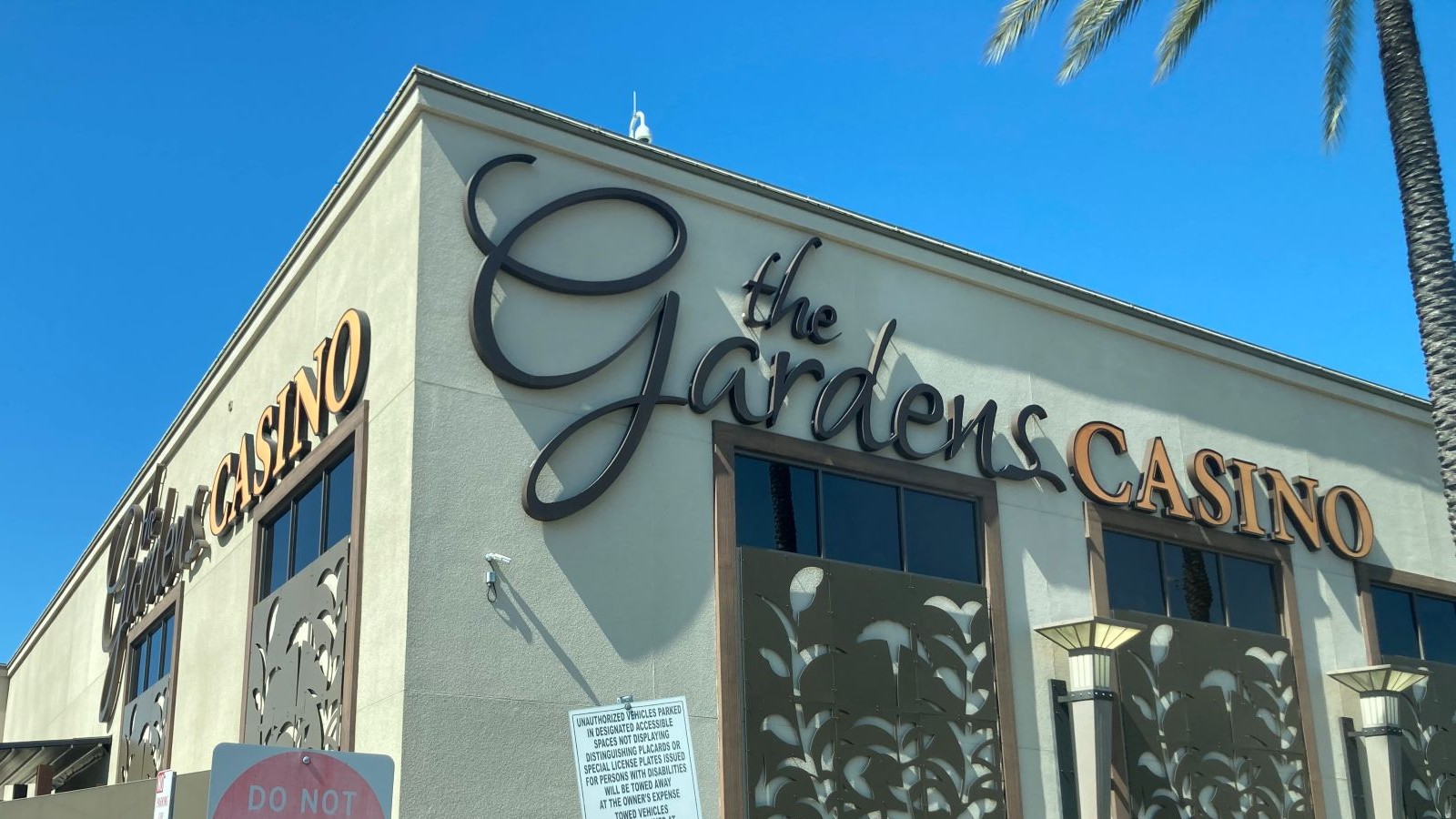
HAWAIIAN GARDENS, Calif. — This city of about 14,000 people, the smallest in Los Angeles County and barely a square mile in size, runs on a single card club. The Gardens Casino employs around 1,300 people and supplies close to two-thirds of the city’s general fund, the money that pays for police, firefighters and the youth and senior programs that hold the place together. So when the state moved to outlaw the kind of blackjack the casino deals, it was not, for Hawaiian Gardens, an abstract gaming-policy debate. A city councilman called it a matter of economic survival. And Hawaiian Gardens is far from alone.
The Rule That Started It
At the center of the fight is a pair of regulations from Attorney General Rob Bonta’s Bureau of Gambling Control, approved in February 2026 and set to take effect that spring. Together they would gut the games that make California cardrooms money. One bars any blackjack-style game built around a target of 21 or a bust, and even forbids using the words “21” or “blackjack” in a game’s name. The other tightens the rules on the third-party companies that bank those games, requiring the dealer role to rotate away from them every 40 minutes or the table shuts down. The combined effect, by the industry’s account, would erase cardrooms’ most popular and most profitable offerings. The legal roots run back to Proposition 1A, the 2000 measure that handed California’s tribes the exclusive right to bank casino games under California gambling laws. Cardrooms spent the next two decades offering a workaround version of blackjack, and the tribes spent those same years insisting it was illegal.
The Cities on the Edge
What makes this different from an ordinary industry dispute is who absorbs the blow. A cluster of working-class cities, most in southeast Los Angeles County, lean on cardroom taxes to a degree that has no real parallel in California. In Hawaiian Gardens the figure is about 65%, and the picture next door is nearly as stark. Bell Gardens pulls roughly half its general fund from the Parkwest Bicycle Casino, and in Commerce the Commerce Casino, one of the largest cardrooms in the state, throws off more than $30 million a year, over 40% of the city’s roughly $80 million budget. Even tiny Colma, the San Francisco Peninsula town better known for its cemeteries, told the court it expects to lose about 15% of its operating budget if its cardroom falters. San Jose, far larger, estimated a $32 million hit. For the small cities, the stakes are existential in a way they simply are not for a big, diversified economy.
Fiscal Emergencies and Bankruptcy Talk
The cities did not wait quietly. Commerce and Bell Gardens declared fiscal emergencies and turned to their voters, advancing quarter-cent sales-tax increases to soften the expected shortfall. Hawaiian Gardens, sitting on about $20 million in reserves and a casino that leans a little less on blackjack than its neighbors, chose a wait-and-see approach instead, freezing hiring and monitoring the news daily, with a possible tax measure held back for later. Behind the scenes, the conversation has gone further. In the rulemaking record, commenters warned that cities like these could face not just cuts but closures, bankruptcy, even disincorporation, the dissolution of the city itself. Chapter 9 municipal bankruptcy, a step only a handful of California cities have ever taken, has surfaced as a real contingency. The cardroom industry frames the danger in round numbers: roughly 20,000 jobs across the sector and, the operators warn, the possibility of losing half their business.
The State Says the Tribes Win
The most striking admission came from the state itself. The Department of Justice’s own economic analysis projected that the regulations would cut cardroom revenue by roughly $460 million a year, and that the main beneficiaries would be the tribal casinos, which stood to gain something like $230 million in business as displaced players moved on. That is the heart of the matter. For years California’s gaming tribes, who hold the exclusive right to banked games at California tribal casinos, have argued that the cardrooms’ blackjack workaround is plain theft of their franchise. The cardrooms counter that the state blessed these games for decades and is now reversing itself under tribal pressure. The dispute has run through the Legislature, where a 2024 law gave the tribes special standing to sue, and through the courts, where a judge threw that suit out in late 2025 while conceding she might be wrong. The regulations were the state’s next move.
A 45-Day Reprieve, and a June 30 Reckoning
For now, the California card rooms are still dealing. On May 21, 2026, a San Francisco Superior Court judge granted a preliminary injunction, finding the cardrooms likely to win on their central claim that the bureau overstepped its authority, since the power to define the state’s card games may rest with a different regulator. But the order runs only 45 days, and a fuller hearing is set for June 30. That date now hangs over every budget meeting in Bell Gardens and Commerce. If the injunction holds and the cardrooms ultimately prevail, the cities can exhale. If it does not, the small towns that staked their futures on a card table will have to learn how to govern without it. Either way, the episode has laid bare an uncomfortable truth about gambling in California: a handful of cities grew so dependent on a legally contested game that a single regulation could unmake them.